Release time:2026-08-09
The core requirements of sheet metal chassis processing technology can be summarized as: thickness consistency, high-precision tolerance control, structural strength and shock resistance, electromagnetic shielding effectiveness, surface quality and corrosion treatment, and process compatibility design.
Key Technical Requirements
Material thickness uniformity: The same part must maintain consistent sheet thickness, which is a fundamental characteristic of sheet metal processes and directly impacts forming stability and assembly accuracy.
Dimensional and Geometric Accuracy: Laser cutting tolerances must typically be controlled within ±0.1~0.2mm, with bending angle deviations ≤0.5° and hole position deviations ≤0.2mm to ensure precise installation of circuit boards and modules.
Structural strength and stiffness: It is necessary to ensure load-bearing and seismic resistance through proper material selection (such as SPCC/SUS304), reinforcement design, and welding processes to prevent deformation during transportation or use.
Electromagnetic shielding (EMC) performance: Conductive continuity must be ensured at seams, with openings designed as round holes or waveguide structures. Conductive gasket positions should be reserved when necessary to block electromagnetic interference.
Surface Quality and Corrosion Resistance: No burrs or cracks on the edges of cutting/bending; strong adhesion of paint/galvanized coating (less than 5% peeling in cross-cut test), with salt spray test typically requiring ≥240 hours (higher for outdoor/extreme environments).
Process Design Constraints: The inner fillet radius R of bending must be ≥ plate thickness t (recommended 3~5t) to avoid stress concentration cracking; optimize nesting to reduce waste, while balancing heat dissipation hole layout and assembly clearance.
Key Control Points in Typical Process Stages
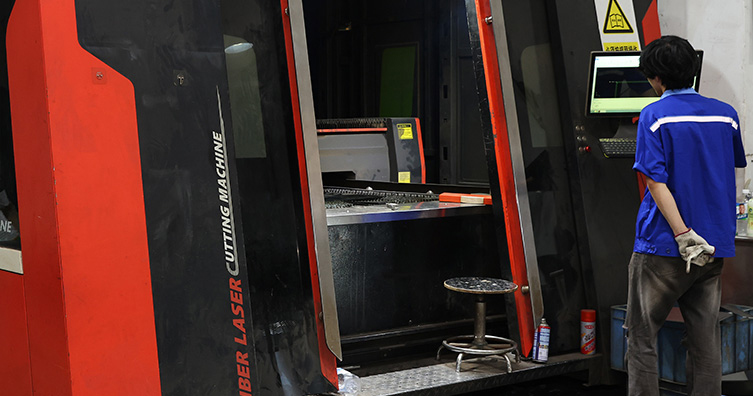
Cutting: Prioritize CNC laser/press cutting to ensure smooth, slag-free edges.
Bending: Control springback by using a CNC bending machine to ensure consistent angles and prevent overbending fractures.
Welding: Thin plates should be welded using argon arc welding or laser welding to minimize thermal deformation; post-welding flatness correction is required (typically ≤1mm).
Surface Treatment: Pretreatment (oil removal, phosphating) must be thorough, with uniform coating thickness (typically 60-120μm for electrostatic powder coating).
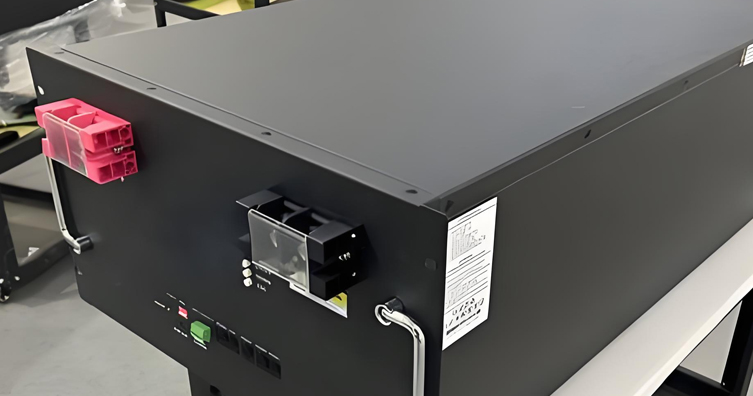
These requirements collectively ensure the protective, thermal dissipation, shielding, and long-term reliability functions of sheet metal enclosures in fields such as electronics, communications, and industrial control.
Would you like me to analyze the varying technical requirements for different application scenarios (e.g., server cabinets vs. industrial control cabinets) to help you quickly match the most suitable processing solution.